

Chapter News
NOW TRENDING: MASS TIMBER BUILDING IN NYC
NOW TRENDING: MASS TIMBER BUILDING IN NYC
New York City, our beloved concrete jungle, could look a lot different as the construction industry learns and adopts more sustainable and resilient materials for building. With concerns around embodied carbon in the construction process, many are considering mass timber as a safer and healthier alternative.
Embodied carbon refers to the amount of greenhouse gas emissions that arise from the manufacturing, transportation, installation, maintenance, and disposal of building materials, whereas operational carbon refers to the carbon that comes from daily energy consumption in a building. According to the Mayor’s Office of Climate & Environmental Justice, “construction is responsible for 23% of global greenhouse gas emissions, of which cement and steel/iron alone contribute 8% and 7%, respectively.”
The mass timber revolution has already begun here in NYC with the New York Climate Exchange project on Governor’s Island as one shining example. The impressive building, designed by SOM, will reach 8 stories at its peak, and then slope down on both sides to 4 stories, all made of timber beams under a solar panel canopy.
As dezeen magazine reported, SOM says the design “not only sets the stage for our post-carbon world but also centers a compelling new public realm for all New Yorkers.” The Climate Exchange will be a hub for climate research, education, and job training. As described by Mayor Adams, “This first-of-its-kind project will make New York City a global leader in developing solutions for climate change while creating thousands of good-paying green jobs for New Yorkers and infusing $1 billion into our city’s economy.”
The EDC’s Mass Timber Studio
Shortly after the news about The Exchange was announced, the NYC Economic Development Corporation (NYCEDC) launched its own Mass Timber Studio, a technical assistance program to support active mass timber development projects in the early phases of planning and design. The Mass Timber Studio kicked off 2024 with an open Request for Applications expected to run for the next 9 months. Eligible architects, engineers, and developers are welcome to apply on their website. Eligibility requirements simply include that organizations be registered in the United States and authorized to do business in New York State with an active commissioned project that meets grant requirements (commercial, institutional, residential, infrastructure, and industrial development are all acceptable projects). Grants of approximately $25,000 will be awarded to selected teams to support project-specific mass timber analysis and design work.
Understanding Mass Timber: Supply Chain, Manufacturing, and Building
Interview with Tanya Luthi, Director of Engineering at Timberlab
To learn more about mass timber I spoke with an expert right here in Midtown Manhattan, Tanya Luthi. Luthi is the Director of Engineering at Timberlab, a full-service mass timber project delivery firm that is an affiliate of Swinerton Builders (“Swinerton”). Timberlab can be a turn-key sub-contracting partner to any firm that needs a mass timber solution.
Q: Can you start us off with an overview of the benefits of using timber?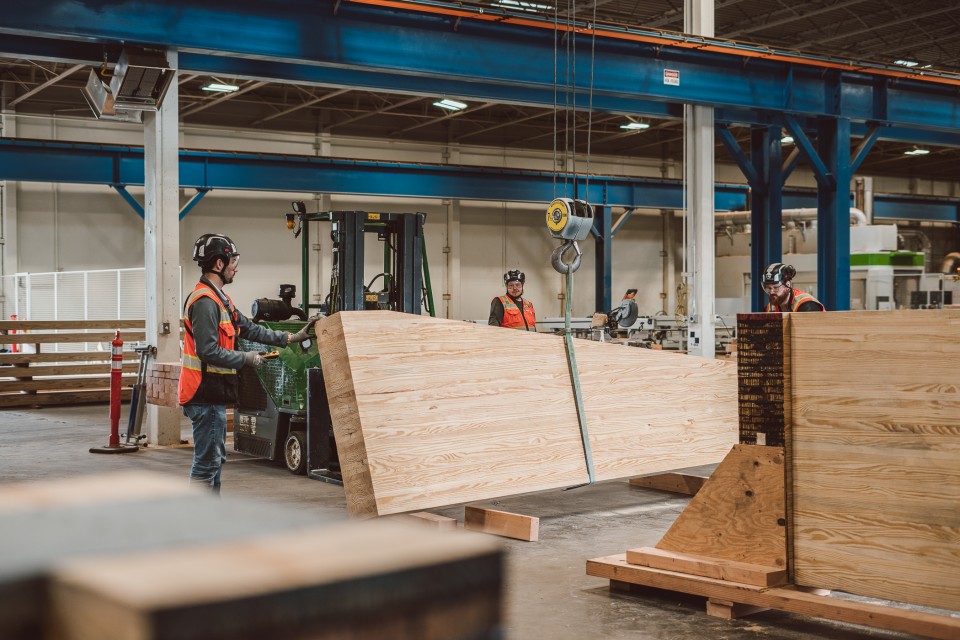
A: Where mass timber shines in comparison is the fact that it’s much lower embodied carbon than steel and particularly concrete. Initially, sustainability efforts focused on things like heating and cooling a space and energy usage, which is measured starting the day people move into a building. Over time, we’ve learned to take a broader view of the whole lifecycle of a building. We now look at how much energy and carbon were emitted during the building process, and we’re still learning a lot about how to do that accounting in the best way.
Mass timber is also an opportunity to use local products from The U.S., and we are not actually de-foresting an area. In broad strokes, the most sustainable thing about mass timber is that it’s the only thing you can regrow. Nothing is mined out of the Earth. If we’re good at managing our forests in a healthy way, we can even contribute to healthier air. Another thing that excites a lot of people in the mass timber world is the potential to re-generate an urban/rural connection within society.
Q: How did your career path lead you to becoming an expert in mass timber?
A: At the beginning of my career as a structural engineer, I knew nothing about mass timber. I am from the New York area, and I didn’t think people built large buildings out of wood. Then I moved to Vancouver and worked for a firm that does a lot of mass timber projects. As soon as I worked on one, I loved it. They’re beautiful and they’re fun, and it’s a sector that’s evolving quickly because it’s new. With steel and concrete, there’s less opportunity to innovate because we’ve already been working with these materials for so long, but with mass timber, everything is new and changing so fast.
I joined Timberlab about 8 months ago as Director of Engineering. Timberlab was founded as a self-performing division of Swinerton to install prefabricated timber on project sites. We have since spun off into a separate entity that is a complete turn-key solution where we design, make shop drawings and 3D visualization, procure the timber, fabricate the components to their final geometry, preinstall hardware, and then assemble the structure on site. We do it all except manufacturing, but we do work closely with suppliers.
Q: How does the supply chain work, from tree to construction site?
A: We purchase already manufactured glue-laminated (glulam) timber and cross-laminated timber (CLT). These materials mostly come from Canada, the U.S., and Europe. The manufacturers use dimension lumber, either from their mills or procured on the open market, and glue it into larger components which are then sent to one of our Timberlab facilities in Oregon or South Carolina.
Once these raw billets arrive at a Timberlab factory, the fabrication begins. We take the shop drawings and upload them into our machines so they cut these large pieces of timber precisely how we designed them. (This process is known as CNC programming, which refers to converting a 3D CAD model into a set of machine-readable instructions.) In many cases, we are also preattaching metal hardware for connections in the shop. These fabricated materials are then transported straight to the construction site and assembled.
When we’re engaged on projects early enough to do the engineering for our clients, we can really tailor the design to the capabilities of what our machines can do easily and efficiently. Every machine is a little different and the attributes of timber can also vary. Until you really know exactly whose products you’re buying, it’s very hard to be efficient. When Timberlab can handle the entire process from design to delivery, then we can optimize the process and save time.
Q: How do you know if the suppliers are farming responsibly?
A: Certification is one tool that designers will use to guarantee sustainability, just like the certified organic label used for food in the grocery store. There are 2 widely used certification programs in North America: Forest Stewardship Council (FSC) certification and Sustainable Forest Initiative (SFI) certification.
However, certification is just one tool, not the only tool, and it can be very expensive for small family-owned foresters to attain. Some small landowners in the U.S. do not have the resources to get the certifications, but it doesn’t mean they aren’t harvesting sustainably. It’s important to have good relationships with these suppliers, especially in the U.S. where a lot is family-owned.
We like to work with the local community to procure our timber whenever possible. For example, our project at The Portland International Airport (PDX) was a huge success story. The design intent of PDX was anchored in a mission to create a bond between the airport, passengers, and the vibrant landscape of the region that attracts so many visitors so it seemed natural to engage with the local landscape and people as much as possible. We designed and built the roof with timber supplied by 40 Oregon and Washington landowners, mills, and fabricators, including fiber from the Yakama Nation: Confederated Bands and Tribes, Skokomish Tribe, and Coquille Tribe. The wood used in the new roof can be traced back to the forests and specific stewardship activities that produced it.
Q: Do you think mass timber will be widespread across NYC in our lifetime?
A: Actually, I sit on the New York City Structural Building Code Committee, and the last cycle involved updating our guidelines around the use of mass timber. For now, in the shorter term, we’re still height-limited to about 7 stories or 85 feet for mass timber buildings. There are a few timber buildings that already exist here within those requirements, such as 670 Union Street condominiums in Park Slope, 360 Wythe mixed-use building in Williamsburg, and 122 Waverly Avenue in Clinton Hill.
NYC is serious about its commitments to climate change, and we’re seeing more action being taken to address them like how Local Law 97 addresses operational carbon. Also, CLT is an important widely-used timber product and it was only permitted in local building codes as of 2022. The EDC starting the Mass Timber Studio could open a lot of doors, too. There seem to be some positive steps in that direction.
Q: Are there any concerns or myths about building with timber that you’d like to address?
A: The biggest myth for sure is fire performance. People think of a wood building, and they think of a stick frame like a single-family house. If those buildings catch fire during construction, the fire can be quite severe. Without drywall and sprinklers in place yet, they’re essentially a building-size version of a pile of kindling— little sticks with lots of air.
What many people don’t appreciate about mass timber, it’s much more akin to trying to start a fire with a log and a match. The large mass of timber behaves very differently than a stick frame, and there have been numerous large-scale studies and tests on it. The International Building Code permits mass timber buildings to go up to 18 stories now that there’s so much data on fire safety performance. Every time I show people the actual data, they are always surprised.
There is also the popular way of thinking that anything new is going to be hard. Of course, there is always a learning curve, but the implementation of mass timber is not very difficult, and it provides a good opportunity to improve the speed and overall process of construction. It can be delivered just in time to the site and there’s no need to stockpile materials. Sites are quieter, and less banging means happier neighbors. It is New York City’s density that makes it right for mass timber. With mass timber, you can get it up fast, not take up too much space, and leave behind very little waste.
Dave Wiltshire - Black History Month
What does Black History Month mean to you?
American history is Black history and I think that there should be a wider focus on it. Unfortunately, it appears that too many states want to teach none of it.
What or who has been your biggest inspiration?
My biggest inspirations have been leaders like Fabrice Lumuba, Kwame Hkrumah, Errol Barrow.
What are your intersectional identities?
I am Barbadian and American.
How can we better bring together people of different identities?
We need to be willing to rip the bandaid off. America needs to fully recognize that it has gained its world dominance from a system of repression and oppression. There has been a lack of desire to face up to these truths and that is what is needed.
Are there any particular contributions or achievements made by Black Americans that you wish to highlight?
Gladys West, one of the inventors of a system that most of us cannot do without today, the GPS!!! Amazing.
Who do you consider to be the strong Black leaders of today who are currently making history?
Unfortunately, I do not see too many at this moment in time. Hopefully some of the folks turning 40 will emerge.
Manny Dick - Black History Month
Manny Dick has over 25 years of experience in global operations and strategic planning, having worked at Verizon and Prudential Insurance before joining CBRE in 2014. At Verizon, he led a team of over 900 employees and was responsible for strategic planning, cybersecurity, engineering, portfolio transactions, and lease administration. He also implemented sustainability initiatives that reduced energy consumption by $900 million annually. At Prudential, he oversaw the overhaul of the portfolio strategy and operations, successfully relocating over 5,000 employees to a new corporate office complex in Newark, NJ.
What does Black History Month mean to you?
Great question. Growing up in England there was no such thing as Black History Month. The concept of highlighting the historic struggles whilst celebrating the accomplishments of Black people globally, not just in America, is a wonderful opportunity to open up the dialogue, and also to learn and educate others who may be less informed.
What/who has served as the biggest inspiration in your life? 
Without a doubt my parents. Being a minority was never accepted as an excuse for not achieving academic goals. Putting yourself in the right opportunities to gain valuable work-related experience was also highly encouraged. Being prepared to make the most of an opportunity when it presents itself was constantly reinforced. Being unprepared for opportunities was not an option in our household.
Do you care to share with us your intersectional identities?
As a Black man, I understand the unique challenges and experiences that come with navigating multiple identities. It's important to acknowledge and embrace the intersection of race, gender, age, and other factors that shape not only who you are but what factors shape the thinking and behavior of others that we work with in this industry. It's important to "step out of your skin" on occasion to gain the confidence and experience of working with colleagues who may not necessarily share your point of view. Get comfortable working with the uncomfortable.
As a leader, how do you support bringing together people of different identities? How do you feel diversity in a team affects outcomes, productivity, or innovation?
As a leader, I believe in fostering an inclusive environment where everyone feels valued and respected. This means actively seeking diverse perspectives, providing opportunities for growth and development, and challenging unconscious bias. Diversity isn't just about ticking boxes; it's about tapping into the collective power of different experiences and backgrounds. A diverse team brings a wider range of ideas and solutions to the table, leading to greater innovation, productivity, and overall success.
Alexandra Liz - National Mentoring Month
HAPPY NATIONAL MENTORING MONTH!
Did you know January is National Mentoring Month?
National Mentoring Month is a global initiative that inspires mentorship and highlights the support and impact on personal and career progression. It aims to illuminate the profound impact of mentoring on personal and professional growth, while promoting awareness of its significance in our lives and careers.
Organizations, communities, and individuals recognize and promote mentorship for mentors and mentees to share and reflect on their journeys. In recognition of National Mentoring Month this January, the IFMA NYC DEI Committee is proud to present a series of spotlights highlighting the mentoring experiences of our esteemed IFMA NYC members. We will have four amazing and impactful spotlights this month!
Alexandra Liz
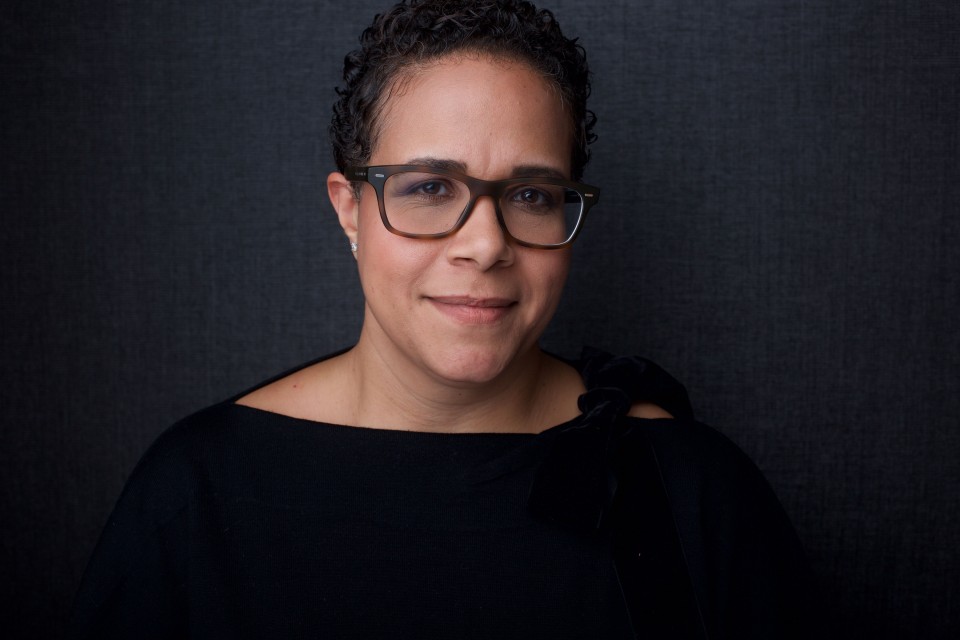
Alexandra is Head of Workplace & Facilities for Blackstone, a leading global finance firm. With over 20 years of market experience, Alexandra's background is quite diverse and includes transaction management, design, buildout, construction, and facilities project management from corporate offices, healthcare facilities, and residential facilities to furniture design on a national and global scale. Before joining Blackstone, Alexandra worked at Lazard and Kroll (previously Duff & Phelps). Additionally, Alexandra Liz serves as the President of the NYC Chapter.
What are three words that come to mind when you hear the word “mentorship”?
Guidance
Counsel
Development
What does mentorship mean to you and why is it important?
To me mentorship means partnership. Partnership of a seasoned and thoughtful professional with a mentee who is looking to gain insight into a specific trade/profession, or simply bounce ideas off from
processes and methods that may help them in their career. It’s an opportunity to share insight on things that went well or things that didn’t while providing the necessary support so the mentee can forward their career, hopefully with a positive work-life balance.
Tell us about a mentee or mentor in your life and what impact did that that have on you as a person.
There is not one person that I can specifically call out as a mentor. Many people that I have encountered from my childhood through my career have mentored me to some degree. From my parents I learned the value of hard work and from my professors the importance of believing in my abilities because if I don’t who will? From my peers the importance of continuously learning, not being afraid to ask questions when I don’t know something, and remaining calm under pressure (the key ingredient for an FM).
Are you a mentor or have been a mentor? Is so, what makes you a successful mentor?
I approach my role of a manager as if I am a mentor. As a leader I can teach and provide guidance to my team members on areas for improvement while recognizing their successes. Most importantly I try to be a good listener and observer. A lot is said with silence or gestures, so it’s key that as managers we see the signals so we can have open communication.
Caroline Horton - National Mentoring Month
HAPPY NATIONAL MENTORING MONTH!
Did you know January is National Mentoring Month?
National Mentoring Month is a global initiative that inspires mentorship and highlights the support and impact on personal and career progression. It aims to illuminate the profound impact of mentoring on personal and professional growth, while promoting awareness of its significance in our lives and careers.
Organizations, communities, and individuals recognize and promote mentorship for mentors and mentees to share and reflect on their journeys. In recognition of National Mentoring Month this January, the IFMA NYC DEI Committee is proud to present a series of spotlights highlighting the mentoring experiences of our esteemed IFMA NYC members. We will have four amazing and impactful spotlights this month!
Caroline Horton
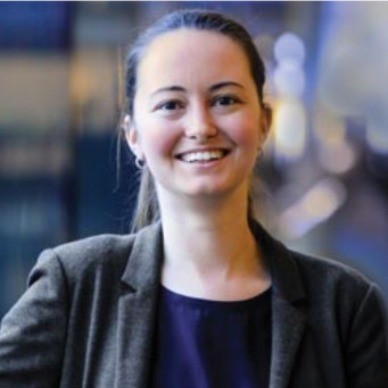
Caroline Horton serves as the Chair for the IFMA NYC’s GWI Committee, with a little over ten years of experience in facilities management. She has been with a private financial firm since 2016 and oversees the facilities operations and maintenance for their biotechnology office in the NYC area. Before joining the industry, Caroline was a Portuguese to English interpreter in Scotland and Brazil, working with EC-225 helicopter pilots. She is also a proud Facility Management graduate student at Pratt Institute and is about to begin her thesis.
What are three words that come to mind when you hear the word “mentorship”?
Patience
Learning
Development
What does mentorship mean to you and why is it important?
Mentorship is one of the greatest gifts someone can offer, regardless of their time in an industry. It is about learning through communication, two people sitting down and sharing what they have learned about a particular topic. Mentorship is about taking the time to cultivate someone’s professional and personal development and only works when the two people in the relationship are open to learning from one another. Learning and development have two different meanings. The mentee can learn a particular topic from the mentor, but it is up to them how to use this added information to develop their skills. Mentorship plays a strong role in our industry because so many more senior FMs are about to retire, leaving behind a new generation of FMs.
Tell us about a mentee or mentor in your life and what impact did that that have on you as a person.
As someone who enjoys working with tools and not knowing where to fit in as a woman, I am grateful for the group of mentors and mentees who I have come across and shared so much of themselves and their experience, that I started to understand where to best utilize my strengths. From casual to formal conversations, every person has made an impact on my career because they shared a new perspective and recommendation. Because of them, I enrolled in graduate school, took courses, and most importantly, developed my voice in this industry.
Are you a mentor or have been a mentor? Is so, what makes you a successful mentor?
I often try to share experiences and recommendations with those who are looking for guidance in this industry. One characteristic of a successful mentor is patience. The patience to actively listen, ask thoughtful questions, and develop someone. I also believe that a successful mentor is someone who supports their mentee and advocates on their behalf. They are their “go-to-person” when they are struggling or simply bounce ideas off one another. Also, vulnerability is another characteristic of a successful mentor and mentee. Being open to difficult conversations is also a vital part of developing in facilities management. The NYC Chapter does a wonderful job in offering mentorship opportunities for members looking for mentors or mentees, both formally and informally through partnerships with non-profits, events, and professional introductions.
Daniel Castner - National Mentoring Month
HAPPY NATIONAL MENTORING MONTH!
Did you know January is National Mentoring Month?
National Mentoring Month is a global initiative that inspires mentorship and highlights the support and impact on personal and career progression. It aims to illuminate the profound impact of mentoring on personal and professional growth, while promoting awareness of its significance in our lives and careers.
Organizations, communities, and individuals recognize and promote mentorship for mentors and mentees to share and reflect on their journeys. In recognition of National Mentoring Month this January, the IFMA NYC DEI Committee is proud to present a series of spotlights highlighting the mentoring experiences of our esteemed IFMA NYC members. We will have four amazing and impactful spotlights this month!
Daniel Castner
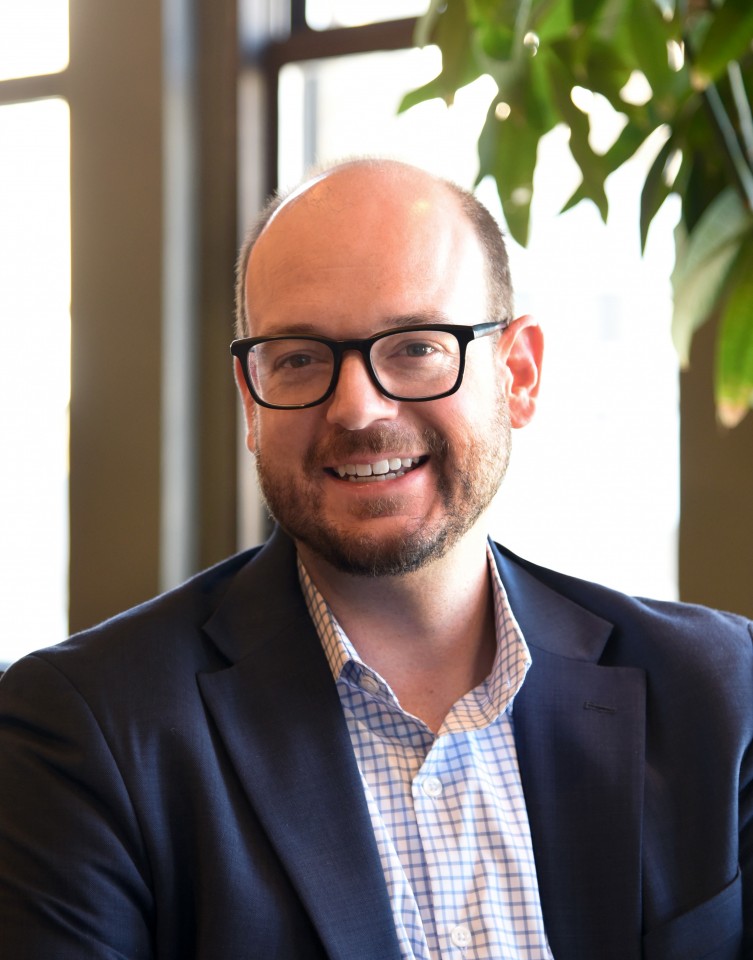
Dan Castner is the immediate past president of IFMA NYC. With 24 years of experience in architecture, Dan joined Mancini Duffy in 2022 as the director of the Life Science Practice. Dan is also a principal and is working with the Mancini team to continue to build its Life Science practice in the Northeast and beyond. The practice will focus on a range of projects and clients, including those with Laboratory Research, Incubators,
Higher Education, Technology and Biotech, Pharmaceuticals, Therapeutics and Medicine. He is spearheading the practice, including ensuring projects are completed on time, within budget, and ultimately fostering empathetic and transparent relationships with the clients.
What are three words that come to mind when you hear the word “mentorship”?
Guidance
Empathy
Reliability
What does mentorship mean to you and why is it important?
Mentorship is absolutely critical to assuring the next generation understands the mistakes of the previous generation. It’s about learning from each other, and realizing that there may not always be one path to success, but having the perspective of someone who has been in the same boat previously can be extremely helpful if all parties are willing and recognize the trust and best intentions are there.
Tell us about a mentee or mentor in your life and what impact did that that have on you as a person.
I’ve had all sorts of mentors. Some guided by setting an example of a high standard to follow. Others had very strong opinions. It helped me realize that there are many different perspsectives, and ultimately, it will be up to me to find my own way, and not necessarily do everything the way it’s been done before.
Are you a mentor or have been a mentor? Is so, what makes you a successful mentor?
I like to think I’m helpful to other members of my team through my years of experience. I think it’s important to relay to others why you are passionate and why you got into the business, as it will help cultivate trust and common ground which are the foundations of successful collaboration.
Annette Vega - National Mentoring Month
HAPPY NATIONAL MENTORING MONTH!
Did you know January is National Mentoring Month?
National Mentoring Month is a global initiative that inspires mentorship and highlights the support and impact on personal and career progression. It aims to illuminate the profound impact of mentoring on personal and professional growth, while promoting awareness of its significance in our lives and careers.
Organizations, communities, and individuals recognize and promote mentorship for mentors and mentees to share and reflect on their journeys. In recognition of National Mentoring Month this January, the IFMA NYC DEI Committee is proud to present a series of spotlights highlighting the mentoring experiences of our esteemed IFMA NYC members. We will have four amazing and impactful spotlights this month!
Annette Vega
Annette Vega has more than 25 years of experience in Facilities Management. She previously held various Facilities Management roles at Yext, Datadog, NBCUniversal, Oxygen Media, and WebMD.
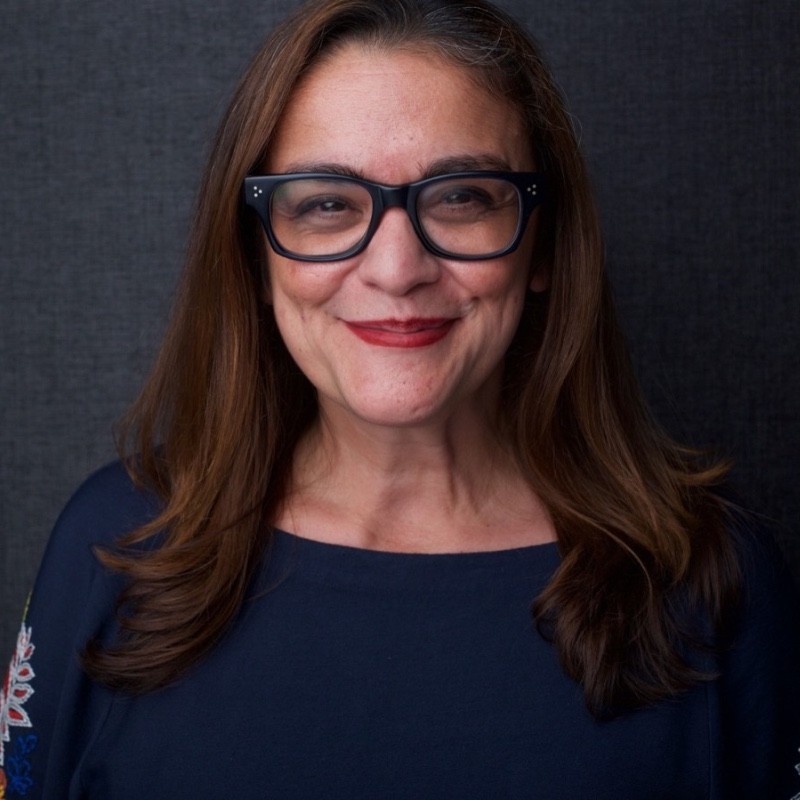
In 2023, as a newly appointed Foundation Trustee, she is currently collaborating with LaGuardia Community College to kick off their first 2-year Facilities Management Program that will launch in the Fall of 2024. During her IFMA NYC Chapter Presidency (2019-2022), Annette partnered with the Foundation and Hot Bread Kitchen in an “IFMA Foundation Essentials of FM Certification'' program. As an instructor and collaborator, she was able to certify over 27 disenfranchised women in New York City. Through her connections, she was able to provide the students with mentors, 1-year IFMA membership post-certification, and job placement in the facilities management industry. Annette continues her educational initiatives as a member-at-large focusing on Education and the FM Pipeline.
What are three words that come to mind when you hear the word “mentorship”?
Advocate
Leadership
Guidance
What does mentorship mean to you and why is it important?
Growing up in New York's inner city, I didn't have many of the opportunities and means to higher education that other youth in the mainstream of America were afforded. I first got my start in FM because someone saw something in me and offered me the opportunity to develop my craft in facilities management. Without her guidance and leadership, I would never have been able to be in the position that I am now in the industry. Along with the gratitude that I feel in my present position, I am very eager to provide others with the same opportunities that were provided to me. It is for that reason that I have dedicated the last few years of my career to providing educational instruction to those who want to be part of our industry.
Tell us about a mentee or mentor in your life and what impact did that that have on you as a person.
I owe all my successes to my very first mentor. Although she always tells me that she had nothing to do with my success and that it was all me, I respectfully disagree. The fact that she always believed in me, put me at the forefront of challenging projects and allowed me the autonomy to sink or swim allowed me to become very successful at completing all projects no matter how big or small. Additionally, she was always open to difficult conversations and consistently had your back. All of that gave me the tools and confidence that I continue to carry today.
Debbie Jaslow Shatz Honored as IFMA Fellow
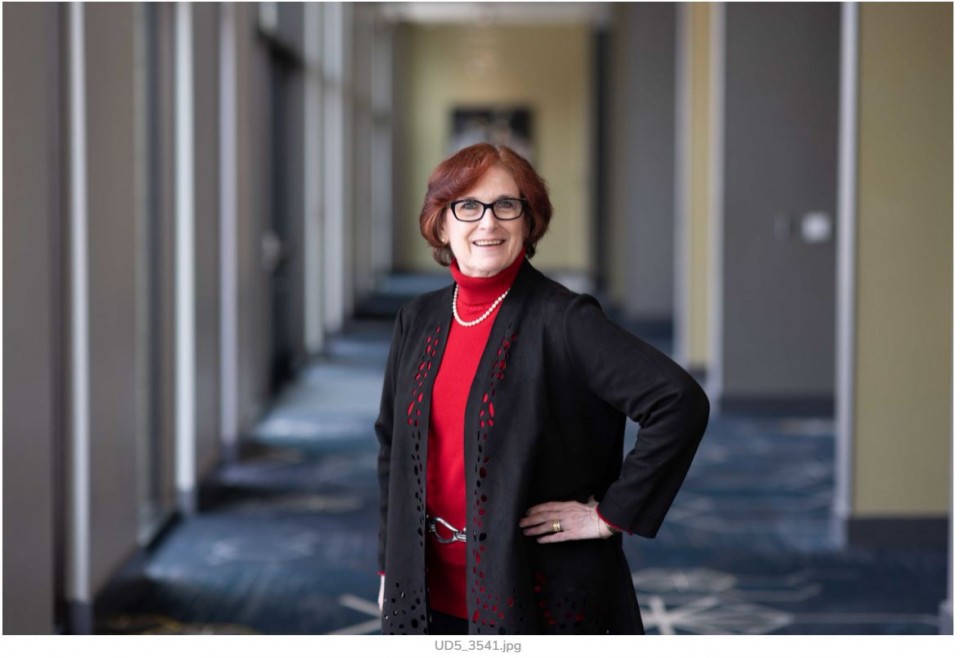
Debbie Jaslow Shatz, CFM, LEED AP Honored as IFMA Fellow
Shatz Recognized for Outstanding Contributions, Leadership and Service to IFMA and the Facility Management Profession
HOUSTON, TEXAS, USA – (Sept. 1, 2023) – The International Facility Management Association (IFMA) is pleased to announce that Debbie Jaslow Shatz, CFM, LEED AP has been distinguished as an IFMA Fellow. Shatz is one of three highly respected IFMA members who have been recognized this year with the association’s highest honor.
IFMA’s Fellows program was established in 1992 to honor association members whose professional achievements, contributions and dedication to IFMA and the facility management (FM) industry are transcendent. Only 0.5 percent of IFMA membership may hold the title; and as of 2023, only 134 individuals have been honored as IFMA Fellows.
In addition to excelling in their professional careers, IFMA Fellows volunteer countless hours and serve in a number of capacities to support and advance the facility management industry and IFMA programs and initiatives. IFMA Fellows serve as advisors and ambassadors, frequently called upon for their unmatched knowledge of the FM profession.
“Being named an IFMA Fellow is the professional pinnacle of our industry,” said IFMA’s Global Board of Directors Chair Dean Stanberry, CFM, SFP. “Debbie isn’t just an innovator within the built environment, but leads by example and shares the wealth of knowledge and experience she’s attained with others.”
As a true pioneer in FM and sustainability, as well as one of IFMA’s longest standing and most active champions, Debbie Jaslow Shatz, CFM, LEED AP, IFMA Fellow has spent more than 40 years demonstrating the value of involvement and furthering awareness of the FM profession. Shatz also cultivates future FMs as a mentor, guest lecturer and an integral member of Pratt Institute’s Curriculum Committee Working Group, for which she orchestrated the addition of construction management and business courses into the FM degree program.
Her stellar career has taken her from managing the renovation of the studio, dressing rooms and business offices for NBC’s “Late Night With David Letterman” to creating and executing strategies for the first building in the northeastern U.S. to obtain LEED certification. She was appointed to the New York City Mayor’s Office of Sustainability’s Carbon Challenge Task Force to represent FMs, ensuring their inclusion in conversations on criteria for changes in local laws; and executing the city’s first large-scale solar photovoltaic program that enabled partial conversion to clean energy.
Shatz has served on IFMA’s Americas Advisory Board and the LATAM Task Force; served as chair of IFMA’s Environmental Stewardship, Utilities and Sustainability Community; co-chaired the joint effort between IFMA New York City (NYC) Chapter and other organizations to teach sustainability initiative goals; is a recipient of IFMA NYC Chapter’s Most Valuable and Most Reliable Volunteer, as well as the chapter’s Lifetime Achievement Award; and was an instrumental part of a team that won IFMA’s Sheila Sheridan Award for Sustainable Facility Operations and Management.
The 2023 Class of IFMA Fellows will be inducted officially on Sept. 27 at the opening session of IFMA’s World Workplace® 2023 Conference and Expo in Denver, Colorado, USA.
About IFMA
Founded in 1980, the International Facility Management Association (IFMA) is the world’s largest, most widely recognized association for facility management (FM) professionals. Supporting more than 24,000 members in over 130 countries, IFMA is a key contributor to the development of international FM standards and works with decision makers to inform FM-related policy. IFMA provides career resources and continuing education, offers three industry-respected credentials, maintains the largest repository of FM-related content on the web and hosts year-round global events. With a vision to lead the future of the built environment to make the world a better place, IFMA believes in the benefit of global diversity, inclusion and social equity, and recognizes that sustainability, resilience and responsible environmental stewardship are paramount. For more information, visit ifma.org and our LinkedIn, YouTube, Facebook, Threads, Twitter and Flickr pages. Follow IFMA’s Connected FM podcast and blog for expert insights on trending industry topics.
# # # #
Human Factors for FM

In my May 2019 article regarding technology, I discussed how Facility Managers are provided a blank state and fabulous opportunity to incorporate new tools, update outdated processes and freshen up approaches to how the entire space is governed when presented with new office space.
The same can be said when it comes to Human Factors, simply defined as studying all factors impacting humans to conduct their work in in the right way. Human Factors play a vital role in planning for a new office space and can be the key to successfully creating one, seeing as it is human expectations and employee satisfaction that you are aiming to accommodate once you reach the finish line. As often the case, companies look to relocate offices due to growth, to evolve and change and to update business practices and environments that slowly and inevitably become outdated.
As previously shared, my company had the unique opportunity to create the ultimate space when moving from our vastly outdated Chelsea neighborhood office to Wall Street in January 2019. The former space was built twenty years ago with minimal to no upgrades made. 160,000 square feet of West Side warehouse space was replaced by high cubicle walls that once served a business purpose but just made the entire space feel cluttered, cavernous and even claustrophobic.
From my first day of employment back in 2013, this space suffered from a serious space crunch – offices, workstations even conference rooms, having only fifteen of them, that mostly lacked up to date A/V technology. The inner space bathrooms were dungeons and no matter what upgrades, you could never make them feel any less dungeon-like.
So when the official announcement was made that our NYC HQs was new moving, it was clear that in order to make the new space far superior to the old, the Steering Committee had to tap into the collective thought process, and even emotions, of the employees to make the new space something to write home about.
As a result, EVERYTHING was thoughtfully analyzed, beginning with the location of the new office space. Yes, rent played a factor, but homework was also done on the different neighborhoods and what amenities and transportation choices they offered, especially when compared to the old neighborhood. After numerous locations reviewed around the city in comparison where all employees lived, the Wall Street area was finally chosen for its centrally located vibrant neighborhood and major transportation hubs (Fulton Street Subway Station, the PATH train, the NJ Ferry, etc.).
The old space was also heavily scrutinized under a microscope to determine how we could make the new space meet our 21st century business needs, specifically by plugging into the very thing that would know best: the employee population. Via multiple e-mail solicitations and surveys, town hall meetings, etc. the Steering Committee continually asked the employee body what would make their jobs easier, more productive and even in some cases, fun. It was important to Executive Leadership that our fellow colleagues felt included and that their voices were being heard and considered in the decision making process.
The welcomed feedback received was indeed vast and very loud:
The furniture must meet current aesthetics while also providing modern ergonomic support. TO accommodate, adjustable style, low walls benching workstations were provided throughout the space so the employees could feel more communal and so teams could work together more easily. While some culture shock had to be overcome due to high wall environment of the old space where most employees could easily become lost in, many welcomed this new, open space approach and believe it brought the employee body closer. Employees were also provided numerous furniture styles to choose from with even a mock station area created so they could test pilot the furniture.
Collaborative eating locations for employees were also sought after and delivered with superior food services, comfortable seating and even scenic Hudson River views.
Other requests included more conference rooms, huddle rooms and collaboration spaces with the best technology possible. As a result, we dramatically increased our meeting room spaces by with complete AV/VC functionality. A technologically enhanced conference room scheduling system was also introduced with pads installed on each of the rooms so not to be so heavily reliant to schedule such rooms via the Concierge
Again, when addressing human factor issues, especially where it comes to new office space, it is the employee population that is the secret to creating a practical, productive workspace that meets the current business needs.
Written by Paul Haley of Wolters Kluwer, IFMA NYC Communications Committee Member
The Villager: Javits Center to Become City’s Solar Leader
BY GABE HERMAN, THE VILLAGER | The Javits Center is taking a shine to sun power in a big way.
Governor Cuomo recently announced that a developer has been selected to design and install more than 4,000 solar panels on the roof of the Chelsea-based convention center. It will be the city’s biggest rooftop solar project to date.
Siemens, a company that produces energy-efficient technology, was selected for the project, which will offset the building’s electric load.
An estimated 1.3 million pounds of carbon emissions will be offset annually, or the equivalent of removing 262 cars from the road, according to the March 20 announcement.

The Javits Center’s rooftop will be getting a slew of solar panels. But they won’t cover up the building’s existing rooftop. Instead they’ll be placed over existing HVAC systems. (Courtesy Javits Center)
Construction of the rooftop solar grid is scheduled to begin in early 2020. Siemens will own and operate the solar panels. The New York Power Authority will then purchase the solar energy, and sell it to the Javits Center.
Along with the rooftop solar panels, there will be a street-level solar array along 11th Ave.
Cuomo touted the Javits Center project as part of his Green New Deal, which aims for New York State’s electricity to be 100 percent carbon-free by 2040. The plan also calls for 70 percent of the state’s electricity to come from renewable energy sources by 2030.
“New York State is leading the nation in advancing bold actions for a cleaner, greener energy system that also spurs economic growth,” Cuomo said in a statement. “Installing solar technology on the roof of the busiest convention center in the United States sets an industry standard for venues throughout New York and across the nation on how best to embrace renewable energy.”
The Javits Center — located between 34th and 38th Sts. and 11th and 12th Aves. — currently has a 6.75-acre green roof, which was constructed as part of the center’s 2014 renovation. The green roof includes technology to control temperatures throughout the facility, which has reduced the center’s energy consumption by 26 percent.
The roof is also a wildlife sanctuary for 26 bird species, five bat species and thousands of honey bees, according to the Javits Center. The planned rooftop solar panels will be built on top of existing HVAC units, to avoid disturbing the roof’s greenery.
“Our green roof has become a model of sustainability for buildings throughout the Empire State,” said Alan Steel, president and C.E.O. of the New York Convention Center Operating Corporation, which operates the Javits Center. “We are proud to work with the New York Power Authority to further expand our environmental impact.”
State Senator Brad Hoylman, who represents the Manhattan district including the Javits Center, said in a statement about the solar project, “This is the busiest convention center in the United States — and the perfect place to model a swift transition off of fossil fuels with New York City’s largest rooftop solar project. Climate change isn’t waiting for us, so we can’t afford to wait to prevent its worst impacts.”
Adapting Your Office Space for the 21st Century
When presented with a newly constructed, state of the art office space, Facilities Managers are provided a blank slate and fabulous opportunity to incorporate new tools, update outdated processes and freshen up approaches to how the entire space is governed.
Moving my company’s NYC corporate headquarters from the Google Building to Wall Street this past January gave the Facilities Team a huge opportunity to take all of our tools and processes and “twenty first centurize” them, especially since we were in a space that felt like the 19th century for quite some time.
Upgrades and changes can be minor but still pack a mean uppercut financially. For example, we did away with our internal visitor system which entailed signing a log book and receiving a paper/sticker badge. Visitors still receive a paper/sticker badge, but now we use a cloud-based system that records pictures, prints badges and most importantly, provides reporting functions when necessary.
And no more booking conference/huddle rooms only through the reception team. Interfaced with MS Outlook, everyone can schedule a conference room of their choosing based on their needs with the Conference Room Scheduler. This system also ties into the chic, electronic keypads that each conference/huddle room is equipped with. The keypads show each daily reservation while also giving you an option to reserve through the keypad which in turn links back to the Outlook system.
Space management is only as effective as the tools you have in place. When I first arrived at my Wolters Kluwer GRC in 2013, they were using Aperture, a program I remember taking a three-day training class for way back in 2000 while at my first NYC Facilities job. Though rudimentarily archaic, Aperture did the trick by providing basic space management, accurate/up to date floor plans of the space, seating information, vacancies and again, most importantly, reporting.
Before that while at ING Investment Management, we strictly used AutoCAD to manage the space. The program made color-coded plans by team, but the process to accomplish this was very long and tedious since AutoCAD is not the most user-friendly application for professionals outside of architecture and/or engineering. That is because AutoCAD was not designed for space management but to design the space you are trying to manage.
But companies (obviously staffed by ex-Facilities Managers) got smart over the years, tapping into the “space management” market and the powerful aspects of AutoCAD to infuse more user friendly and acute space management programming, thus creating a very effective tool for Facilities Managers that is all cloud-based and globally accessible.
Knowing that we would be moving into a new space in late 2017, I started the hunt, asking around, only being aware of Archibus, which I pursued a few years earlier, only to be shut down for budgetary reasons. Ironically, these “space management” tools were very hard to find, even in the most obvious places.
My fellow WK Facilities team members joined the hunt to find the perfect program and found a few systems after some digging: Archibus and FM Systems. We spent many hours reviewing, flipping every stone, kicking every tire, testing each program’s strengths and weaknesses to see which would best fit our specific needs. While we eventually would like to roll this system out to all of our national sites, the primary function of this intense review was to find a robust and effective system that can tame the unpredictable FM NYC Beast. Our new NYC office also had specific needs not required at the other locations. My fellow team members also knew I was very hungry to finally implement this system, providing me full support along the way.
In the end, we learned that Service Now/Nuvolo was already being used by our internal IT folks that also had a robust space management tool and integrated ticketing system, so we decided to roll with the punches and move forward with the system already in place.
In the end getting a new space up and running takes a lot of work but look at it positively as an opportunity to rear your Facilities team and technologically into the current century!
Written by Paul Haley of Wolters Kluwer, IFMA NYC Communications Committee Member
